
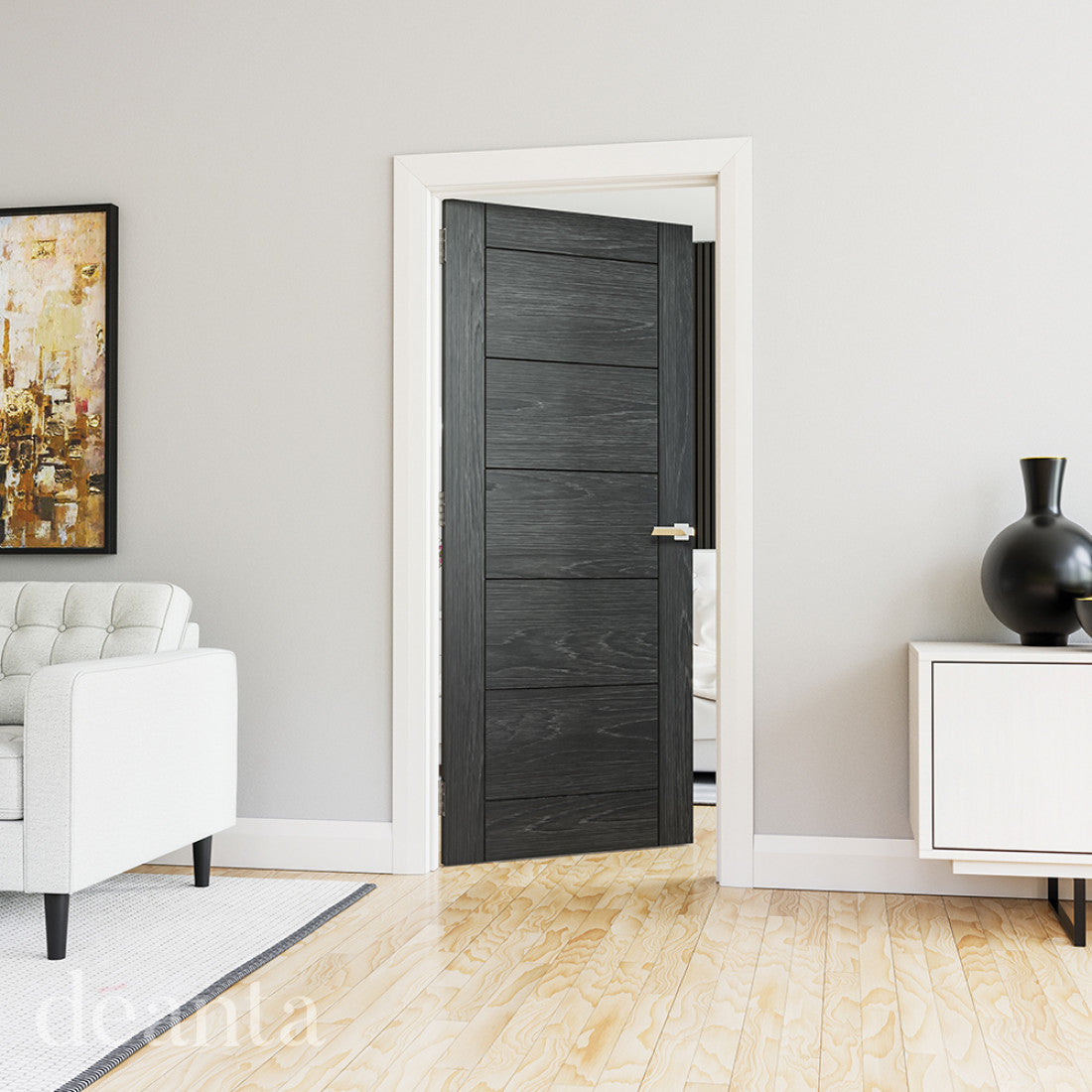
Do Dark Doors Make a Room Look Smaller?
Samuel MorrisDo Dark Doors Make a Room Look Smaller? Our Guide!
Dark interior doors are sleek, dramatic, and increasingly popular in modern homes. But one of the most common concerns homeowners have when considering dark doors is whether they make a space look smaller. View the Oak Seville Black | Click Here

So, do dark doors make a room look smaller?
The short answer: They can, but not always. It depends on context—lighting, wall colour, layout, door style, and how the rest of the space is styled all influence the final impression. Our Full Urban Range can be found here
In this blog post, we’ll explore the ins and outs of dark doors, from their aesthetic appeal to how they impact the look and feel of your rooms. We'll also share practical tips to help you style dark doors to enhance rather than shrink your space.
The Psychology of Colour and Space
Let’s start with the basics: how colour affects our perception of space.
Light colours tend to reflect light, making rooms feel airy and open. Dark colours absorb more light, which can make walls or objects recede—or feel more compact—depending on how they’re used. Black Malvern | Click Here

So it’s true that large surfaces painted in dark colours, especially in small or poorly lit spaces, can feel more enclosed. However, that rule isn’t absolute when it comes to interior doors. Why? Because doors aren’t just surfaces—they’re features, accents, and even focal points.
A black or dark walnut door, for example, can add contrast and structure to a room, giving it character and depth rather than just “shrinking” it.
The Role of Light: Natural vs. Artificial
Lighting plays a massive role in how dark doors affect a room’s perceived size.
1. Well-lit rooms + dark doors = visual drama, not claustrophobia
If your space benefits from ample natural light, a dark door can look stunning without making the room feel smaller. In fact, it often enhances the design. Natural light creates shadows and depth, helping dark features like doors blend in rather than stand out starkly. Ely Oak Black Brushed - Click Here

2. Poorly lit rooms + dark doors = potential for visual heaviness
In dim rooms, dark doors can dominate if they’re not balanced with lighter walls or complementary finishes. However, the solution isn’t necessarily to avoid dark doors altogether—it’s to work on the lighting. A few well-placed ceiling lights, floor lamps, or even uplighting above the frame can offset the visual weight of a dark door.
Wall Colour: Contrast or Camouflage?
One of the most effective ways to ensure dark doors don’t make a space look smaller is to consider the surrounding wall colour.
Option 1: High contrast for drama
White or pale walls paired with dark doors create a bold, contemporary look. The contrast draws the eye to the door and can be visually stimulating, particularly in hallways or open-plan areas. This setup often works best in rooms with good lighting and modern furniture. Camden Black Urban - Click Here

Option 2: Monochrome or tone-on-tone
Painting the walls a deep shade similar to the door colour can create a seamless, cocoon-like atmosphere. This can be especially effective in studies, bedrooms, or libraries. However, to keep the space from feeling too heavy, you’ll want to balance with light flooring, metallic hardware, or mirrored accessories.
Option 3: Mid-tone harmony
Pairing dark doors with mid-tone walls—think greige, soft sage, or muted navy—can offer a balanced look that feels modern without the starkness of high contrast.
Style Matters: Modern vs. Traditional
Not all dark doors are created equal. The style of the door—panelled, flush, glazed—affects how it’s perceived in the room.
Glazed Dark Doors
These are an excellent choice for smaller or darker spaces. The glass panels allow light to pass through, reducing the visual weight of the door while still offering the richness of a dark frame. If you're concerned about space feeling tight, opt for a dark door with clear or frosted glazing.

Flush or Minimalist Doors
A flush black or charcoal door with no visible panelling can look ultra-sleek in modern interiors. If you’re using a dark flush door in a narrow hallway or small room, keep the hardware subtle and sleek to avoid visual clutter.
Panelled Doors
Panelled doors in darker finishes tend to suit traditional or transitional interiors. The extra texture adds interest, but it can also draw attention—so consider panelled dark doors in larger rooms where the detail can shine without overwhelming.
Dark Doors as Design Anchors
Rather than thinking of dark doors as space-eaters, think of them as anchors. They ground a room, providing contrast and giving the eye a clear focal point.
Visual Balance
In rooms with light floors, pale walls, and neutral furnishings, a dark door adds weight and depth. It keeps the design from feeling too “floaty” or sterile.

Repetition for Flow
Using dark doors throughout a home creates continuity. When repeated, the colour becomes part of the background, rather than a single jarring element. This strategy works particularly well in corridors or connecting spaces.
Accent Pairings
You can pick up the dark tones elsewhere in the room—black window frames, metal fixtures, picture frames, or even textiles like cushions and throws. This coordination makes the door feel like an intentional part of the scheme, not a random bold choice.
When Dark Doors Can Make a Room Look Smaller
Let’s get honest. There are situations where dark doors can shrink the feel of a space:
- Small rooms with low ceilings: If you add a dark door and dark trim and dark furniture, you risk making the space feel boxed in.
- Poorly lit entryways: A dark front or hallway door in a shadowy corridor can dominate if not balanced with mirrors, gloss finishes, or strong overhead lighting.
- Mismatched design choices: If the door is dark and heavy-looking while the rest of the space is light, bright, and minimalist, it might feel out of place.

But even in these cases, there are fixes. Mirrors, reflective materials, clever lighting, or simply adjusting trim colour or wall tone can make a huge difference.
Material and Finish: Not Just About Colour
Dark doesn’t always mean heavy. The door’s material and finish also impact how it reads in a room.
High Gloss
A dark door in a glossy finish reflects light, which helps mitigate the “shrinking” effect. These are great for contemporary homes or flats where space is tight, but style is key.
Wood Grain
Dark stained wood (like walnut or wenge) shows texture, which adds depth and visual interest. A grainy finish feels warmer than pure black and is especially beautiful in transitional or rustic homes.
Matte Finishes
Matte dark doors are bold and moody. They absorb more light and have a modern feel, but you’ll need to pair them with good lighting and complementary tones to prevent a space from feeling dull or flat.
Real-Life Examples: When Dark Doors Work Beautifully
Let’s walk through a few styling scenarios where dark doors elevate a space rather than diminish it. View the Blenheim

1. Scandi Minimalism with Black Accents
In a white-walled flat with oak floors, matte black doors offer a clean, graphic edge. Black pendant lights and picture frames echo the tone, tying everything together.
2. Moody Bedroom Retreat
A master bedroom painted in deep navy or forest green with a matching dark walnut door creates a cocooning, restful vibe. Brass handles and a cream rug add softness and elegance.
3. Industrial Loft
Exposed brick, concrete floors, steel-framed glazed doors—dark finishes thrive in loft-style spaces. Here, the door doesn’t shrink the room; it defines it.
4. Classic Hallway with Panelled Doors
In a hallway with cornicing and traditional mouldings, dark grey panelled doors contrast beautifully with pale walls and checkerboard flooring, creating a high-end feel.
Expert Tips: How to Make Dark Doors Work
If you’re still on the fence, here are some quick tips to ensure your dark doors enhance, not shrink, your space:
-
Balance with light walls and ceilings
Don’t match everything dark. Allow the door to pop against a lighter backdrop. -
Use glazed options in tighter spaces
Glazed dark doors allow light flow while retaining the elegance of dark finishes. -
Install adequate lighting
Uplighters, spotlights, or sidelights can brighten the area around the door. -
Repeat the colour elsewhere
Tie the door colour into skirting, furniture legs, curtain rods, or artwork. -
Consider the flow between rooms
Using the same door style and colour throughout creates consistency and cohesion. -
Choose the right hardware
Satin brass, polished chrome, or matte black handles can either pop or blend, depending on your goals. -
Frame it well
A dark door with crisp white trim can look classic and defined. Alternatively, go for tone-on-tone with dark architraves for a more modern look.

Final Thoughts: Dark Doors Are Bold—But Not a Risk
So, do dark doors make a room look smaller?
Only if you let them.
With the right styling choices, a dark door can add depth, contrast, and sophistication to any space—even a small one. The key is to balance it with the rest of the room: light, colour, finish, and texture.
In the end, dark doors are a design choice that speaks to confidence. They're not for everyone, but when done right, they can elevate your space far more than they restrict it.

Looking for Dark Doors?
At Interior Doors Ltd, we stock a wide range of high-quality dark internal doors—from black flush designs to glazed walnut options. Whether you’re after a bold look for your hallway or something subtle for a home office, we’ve got options to suit every space and style.
Visit our online store or drop by our showroom to see our doors in person. Our team is always happy to help you find the perfect door—dark or otherwise.